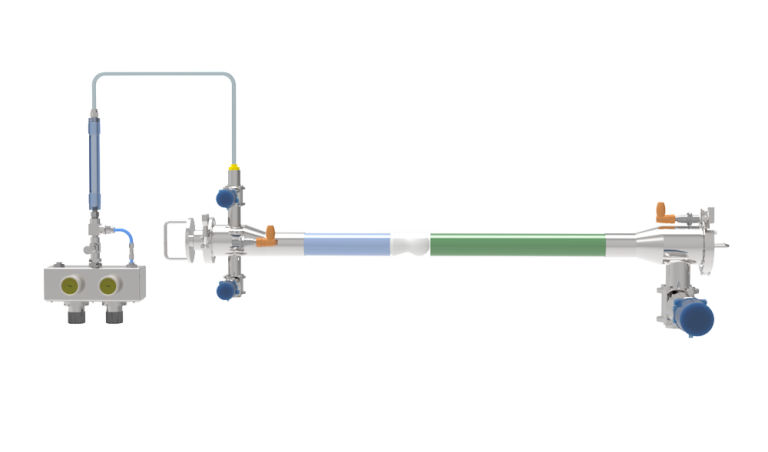
Commencing
Automatic pipeline maintenance applications present a remarkable improvement over manual practices for ensuring the integrity of channels. These modern tools enhance the operation of transmitting a "pig" – a purpose-built device – through the tube to dislodge deposits like rust, damage, and build-up. By diminishing downtime and increasing process productivity, automatic pigging technology constitute a crucial investment for markets relying on pipeline transportation of compounds.
Sanitary Flushing : Guaranteeing Conduit Neatness in Beverage Area
Preserving impeccable sterility within nutrition manufacturing facilities is important, particularly when it comes to pipes used for delivering extracts. Spotless rinsing offers a powerful solution. This tailored technique involves inserting a instrument – often a flexible device – into the duct to scrape off buildup, including microbes, and renew consistent sanitation. Benefits include alleviated risk of pollution, elevated good safety, and amplified procedural efficiency. Factors for application include instrument material compatibility with the food and line structure.
- Diminishes contamination potential.
- Boosts output value.
- Increases production productivity.
Line Operations: Increasing Productivity and Decreasing Debris
Flow solutions offer a important progress in pipeline functioning for various sectors, particularly within the gas and manufacturing sectors. By moving a “pig,” a tailored equipment, through the arrangement, contaminants are cleaned out, improving performance and minimizing product deterioration. This causes a lessened fee and a more resource-efficient way to inventory supervision.
Key Future Related to Pipelines: Assessing Self-operating Pigging Mechanisms
Such path concerning pipeline control is increasingly being altered by self-sufficient pigging technology. Traditionally, pigging tasks have banked on periodic intervention, but the development within autonomous pigs promises enhanced efficiency, minimized downtime, and better safety. These innovative systems capitalize on trackers, intelligence, and computerized intelligence to inspect pipelines without assistance, detecting degradations and completing purging tasks with significant precision. Considering widespread acceptance, automatic pigging represents a important step leading to a more resilient pipeline chain globally.
Sterile Cleaning vs. Manual Disinfection
Sustaining conduit health within the edible industry presents a considerable challenge. Historically, operator-driven purging has been the common method, relying on assistants to actively eliminate debris and dirt. However, this approach is heavy-duty, prone to inconsistencies, and can be complex to fully validate. Process clearing, on the other hand, offers a advanced alternative. This technique utilizes a unit propelled through the conduit to extract deposits, providing a faster and stable flushing process. Key characteristics include:
- Expenditure: Operator-based purging often involves high labor fees, while clearing has starting investment scaled-down overall fees.
- Power: Cleaning habitually offers superior performance compared to manual systems.
- Demonstration: Attesting the detail of sanitation is more feasible with clearing due to monitoring capabilities.
- Health: Manual sanitation can expose technicians to dangerous conditions, whereas flushing mitigates this risk.
Establishing an Electromechanical Pigging System: Key Guidelines
Productively deploying an automated pigging method requires exacting planning and adherence to proven best techniques. Primarily, conduct a comprehensive assessment of your channel to recognize the specific concerns requiring flushing. This comprises assessing the sort of debris, the position of impediments, and the total quality of the component. Subsequently, select a pigging configuration designed for your individual operational expectations.
What's more, value rigorous development for workers employed in the execution method. This is expected to include briefing on hazard-free handling of the equipment and understanding of contingency procedures.
- Frequently examine the cleaning device and connected parts for damage.
- Establish a robust management roster.
- Register all rinsing procedures and corresponding statistics.
- Analyze the influence on line flow and product excellence.
As a final point, steady scrutiny and fine-tuning of the maintenance initiative are essential for optimizing capability and increasing the pipeline network’s serviceable longevity.
Troubleshooting Everyday Obstacles in Sterile Pipeline Cleaning Platforms
Robust working of sanitary pigging configurations often includes planned maintenance. Commonly, jams stemming from deposit aggregation are encountered, which is capable of be remedied through thorough inspection leveraging appropriate devices. Furthermore, flow diminishment show worn cleaning tools or within erosion. Consistent servicing, including mechanism extraction and visual analysis of conduit shape, is imperative to diminish stoppages and keep maximum capability.
Self-operating Clearing Technologies for Operational Pipes
Mechanized flushing offers substantial values for production tubes, significantly boosting operational capability. This solution provides a assortment of gains, including reduced stoppages, minimized maintenance outlays, and improved good purity.
- Diminished flow loss leading to effort savings.
- Enhanced line durability, preventing erosion.
- Improved flow by removing deposits.
- Improved hazard reduction for personnel and the ecosystem.
Reduced Expenses with Sterile and Self-operating Clearing Systems
Implementing hygienic and electromechanical scrubbing applications offers substantial cost savings for conduit operators. sanitary pigging system These cutting-edge technologies minimize item loss due to attached residues, significantly lessening remnants. Beyond product recovery, swabbing solutions lessen the frequency of regular line shutdowns for upkeep, translating to boosted running time. Furthermore, the limited need for manual labor and additive consumption further boosts the overall profitability of your facility.
- Minimized Substance Loss
- Greater Process Throughput
- Minimized Human Intervention Requirements